Alarm methods compared at a glance
| Method | Mechanism | Setup | Common failure points | Good fit for |
|---|---|---|---|---|
| NFC tag | Tap near a paired NDEF tag | Compatible phone and tag | Tag damage, metal interference, positioning, unavailable reader | A repeatable physical checkpoint without camera aiming |
| Barcode or QR | Frame a registered code with the camera | Printed code or household barcode | Low light, glare, damage, blocked code, camera permission | A printable target or an object already in the home |
| Movement | Complete steps, shakes, or another sensor task | Phone sensors and safe space | Sensor variation, limited space, accessibility barriers | A phone-only physical task |
| Puzzle | Solve math, memory, typing, or pattern tasks | Phone only | Can be completed in bed, unsuitable difficulty, visual barriers | Mental engagement without another object |
| Photo | Match a scene or photograph an object | Camera and stable visual target | Lighting, framing, background changes, privacy | A visual task linked to a location |
| Dedicated hardware | Use a separate button, puck, wearable, or clock | Product-specific device | Battery, power, connection, lost device, vendor dependency | A tactile target for someone comfortable adding hardware |
This table compares mechanisms, not effectiveness. Its failure points are practical conditions to test, not vendor-reported failure rates. Products vary, personal needs differ, and there is no credible basis for calling one method scientifically proven or universally superior.
NFC tags vs barcode and QR codes
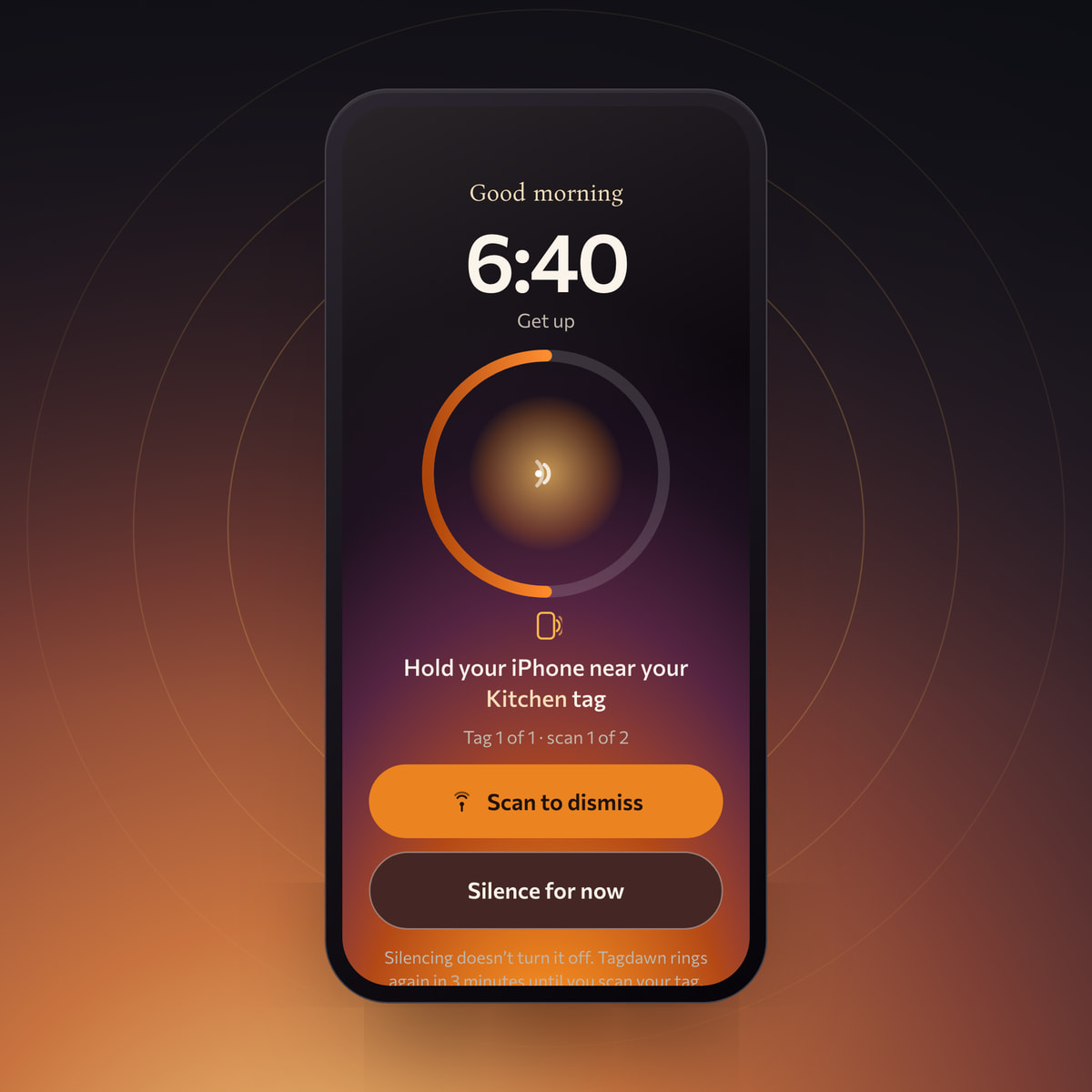
An NFC method starts a foreground reader session after you deliberately ask to scan, then asks you to bring the top area of a compatible iPhone close to a tag. Proximity alone cannot start the session. A barcode or QR method uses the camera, so the code must be visible and framed well enough to recognize. Both can turn a household location into the completion point.12
- Choose NFC if you prefer a quick proximity tap and do not want to aim a camera in low morning light.
- Choose barcode or QR if you want a target you can print or an existing product barcode you can register.
- Test NFC on the final surface because metal and phone positioning can affect scanning.
- Keep a code clean, visible, and consistently lit if the camera must recognize it.
Alarmy documents a mission that uses a preregistered household barcode or printed QR target. That describes one product’s implementation, not every barcode alarm. As a general camera-method precaution, test visibility and recognition in the real location before relying on the code.4
Movement, puzzle, and photo missions create different demands
Movement missions use phone sensors to count steps, shakes, squats, or similar actions. They need no external marker, but space, mobility, and sensor variation matter. Depending on the task, a user may still complete it close to bed.3
Puzzle missions add cognitive friction through math, typing, memory, or pattern tasks. They are compact and hardware-free, but difficulty is personal. A task that is too easy may add little interruption, while one that is too hard may be inaccessible or simply frustrating.3
Alarmy describes its Photo Mission as photographing a preregistered location, which can connect dismissal to a place. As a practical camera-method precaution, retest the target after lighting, framing, or the room arrangement changes.4
What dedicated hardware changes
A dedicated clock, puck, wearable, or button gives the routine a tactile object that does not depend entirely on a phone screen. The tradeoff is another device to buy, power, charge, connect, or replace. Hardware products vary substantially, so check the manufacturer’s current instructions rather than treating them as one category with one behaviour.
Choose the method that fits your real morning
- Decide whether leaving bed mattersA fixed NFC, code, or photo target can require a change of location. A phone-only puzzle may not.
- Check accessibilityAvoid a method that depends on unsafe movement, tiny visual targets, difficult arithmetic, or actions that do not suit your body.
- Test the environmentConsider low light, shared rooms, phone permissions, metal surfaces, camera framing, and morning noise.
- Plan a fallbackTags move, codes get damaged, sensors vary, and cameras lose permission. Know how you will complete the alarm safely if the primary method fails.
- Prefer repeatability over punishmentThe best method is one you can set up correctly and use consistently, not the one that sounds most severe.
Sources
- Building an NFC Tag-Reader AppApple Developer Documentation
- Use App Clips on iPhoneApple Support
- Alarmy Mission alarm methodsAlarmy by DelightRoom
- Introducing Alarmy’s Wake-Up MissionsAlarmy by DelightRoom